Permit rules for bulky rubbish in West Kensington
Posted on 31/07/2026
If you are trying to shift a sofa, mattress, old wardrobe, or a stack of renovation leftovers, the permit rules for bulky rubbish in West Kensington can feel oddly unclear at first. One minute you are just getting rid of a broken item; the next you are wondering whether it can sit on the pavement, whether a skip needs a permit, or whether a collection crew can take it away without causing a fuss on the street. Truth be told, that confusion is common.
This guide breaks the topic down in plain English. You will learn when a permit is usually needed, what bulky rubbish means in practice, how local access and parking issues can affect collections, and what a sensible, low-stress disposal plan looks like in West Kensington. If you want the short version, keep this in mind: the permit question is usually less about the item itself and more about where it is placed, how long it stays there, and whether it affects the public highway.
For broader context on local waste handling and nearby services, you may also find the W14 council rubbish rules guide useful, along with the West Kensington Station bulky rubbish pickup and rules article if you are dealing with a tighter street-side collection.
Why permit rules for bulky rubbish in West Kensington matter
West Kensington sits in that classic London mix of busy residential streets, period conversions, and awkward kerbside access. That matters because bulky rubbish rarely exists in a neat vacuum. A bulky item often ends up near a front garden wall, on a narrow forecourt, in a shared hallway, or by the edge of the road while everyone tries to avoid blocking pedestrians, cyclists, or neighbours trying to get past with shopping bags and prams.
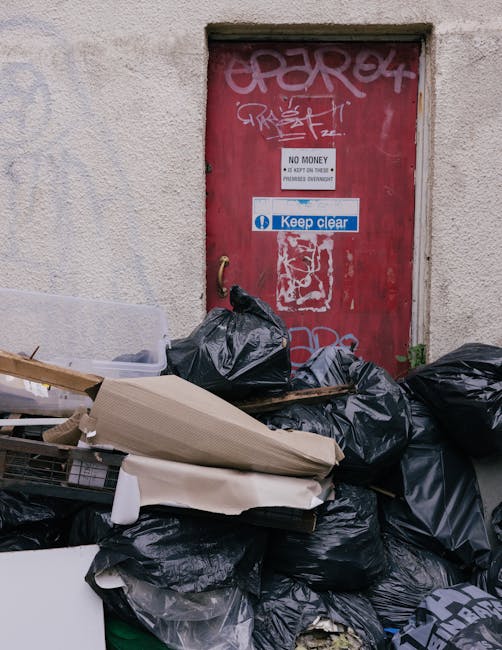
The permit issue usually comes into play when the rubbish is placed on the public highway. In simple terms, that means a pavement, road, or any part of the street that is not privately controlled. If you are using a skip, a container, or even leaving bulky items out where they could obstruct the pavement, permission may be needed. If the waste stays entirely on private land and is collected directly, the permit question may be much simpler.
Why does this matter so much? Because getting it wrong can cause delays, extra costs, complaints from neighbours, and in some cases the need to move everything at short notice. And nobody wants to haul a broken sofa back inside at 8pm in the rain. Nobody.
It also matters from a safety standpoint. A bulky item left in the wrong place can create trip hazards, block visibility, or make a narrow street even tighter than it already is. For anyone dealing with property moves, a clear-out, or a renovation, that can quickly turn a straightforward job into a messy one. If you are planning a larger clearance alongside household contents, the house clearance in West Kensington service page is a helpful place to understand how a full-property job can be handled more cleanly.
How permit rules for bulky rubbish in West Kensington works
The basic logic is fairly simple once you strip away the jargon. If your bulky rubbish is staying on private property and is collected from there, a permit may not be necessary. If it goes on the street, pavement, or another shared space, a permit or approval is much more likely to matter. The exact requirement depends on the type of waste arrangement, the space involved, and how long the item is there.
In practice, bulky rubbish can fall into a few common scenarios:
- Kerbside placement for collection - items are put out for pickup and may need to follow local placement rules.
- Skip hire - a skip placed on a public road usually needs a permit.
- Private property collection - waste is kept inside a driveway, forecourt, yard, or loading area, and lifted from there.
- Timed street loading - items are brought out briefly for collection, often to reduce disruption.
The details matter. A mattress left outside for a few hours can be treated very differently from a skip sitting in place for days. Likewise, a clearance team arriving with the right vehicle and enough manpower may avoid the need to leave waste on the highway at all.
That is one reason many residents prefer a direct collection approach rather than relying on ad hoc roadside piles. It is cleaner, usually faster, and far less likely to trigger a permit headache. If access is tight, the tight access rubbish jobs on Earl's Court solutions article gives a useful sense of how awkward London access can shape the disposal plan, even when the job itself is modest.
Key practical point: the permit question is not just about the rubbish. It is about location, obstruction, duration, and logistics.
Key benefits and practical advantages
Following the right permit route is not just about compliance for the sake of compliance. It actually makes the whole job easier. When the disposal method is properly planned, you tend to get fewer surprises and less back-and-forth on the day.
- Fewer delays - no last-minute scramble to move items because a roadside setup is not allowed.
- Less risk of fines or complaints - especially where waste blocks access or sits too long.
- Cleaner streets and entrances - important in a neighbourhood where space is already limited.
- Better safety - fewer trip hazards and less lifting under pressure.
- More predictable scheduling - collection can be organised around access rather than hoping for the best.
There is also a more human benefit that people often underestimate: peace of mind. If you are already dealing with a move, a bereavement clear-out, a renovation, or landlord turnover, the last thing you want is to argue about whether a pile of furniture should be there or not. Sorting the permit angle early removes one layer of stress. Small thing, big difference.
For homeowners and landlords alike, good planning also means you can compare disposal methods properly. You might decide that a direct collection is more efficient than arranging a skip, or that a fuller clearance is better than several little trips. If cost clarity matters, the pricing and quotes page can help frame the conversation before you commit to anything.
Who this is for and when it makes sense
This guidance is relevant to anyone in West Kensington who needs to get rid of large items and wants to avoid the usual mess around permissions, access, and collection rules. In real life, that includes a lot of people:
- homeowners clearing out furniture after a move
- tenants leaving a property in decent condition
- landlords dealing with end-of-tenancy bulky waste
- office managers removing outdated equipment or chairs
- builders or contractors with mixed waste after light works
- families sorting lofts, garages, or basements
It makes sense to think about permit rules early if any of these are true:
- the waste may need to sit on a pavement or road, even briefly
- the street is narrow or heavily parked
- you live in a managed block or a property with shared access
- you are planning a skip rather than a direct collection
- the items are awkward, heavy, or hard to move in one go
One local pattern is worth mentioning. In West Kensington, many properties have a little front space but not enough for anything large. So people assume the item can just "wait outside for pickup". Sometimes that is fine, sometimes it is not. The difference is often in the precise setup, and that is where a careful plan pays off.
If your job involves furniture specifically, you may want to look at the dedicated furniture disposal in West Kensington information, since sofas, wardrobes, and beds tend to raise the same access and handling questions again and again.
Step-by-step guidance
If you want a sensible way to approach bulky rubbish in West Kensington, use this straightforward process.
- Identify the waste clearly. List the items. A sofa, mattress, broken table, old cabinet, and a sack of mixed junk may all need different handling.
- Check where the items will be placed. Private driveway? Front garden? Pavement? Roadside? This is the key permit trigger.
- Decide whether the waste will be collected directly or left out. Direct lift-and-load collection is often the cleanest route.
- Think about access. Door width, stair turns, parking space, loading distance, and lift availability can all change the plan.
- Confirm any management or building rules. Flats and shared buildings sometimes have their own collection windows or restrictions.
- Allow time for the collection. Same-day is possible in some cases, but not every job should be rushed.
- Keep the area safe and tidy. Leave room for pedestrians and avoid blocking gates, bins, or driveways.
- Ask for the disposal route to be explained. Good operators should be able to tell you how the waste will be handled and whether recycling is part of the process.
If the job involves a fuller property clear-out, a useful companion read is the loft clearance West Kensington page, since loft jobs often produce the exact same bulky items people later worry about leaving outside.
One practical tip: take a quick photo of the items and the access route before the collection day. It sounds basic, but it saves a surprising amount of time when someone needs to judge whether a sofa can get down a stairwell without a fight. You know the sort of fight: the kind furniture always seems to win.
Expert tips for better results
After enough real-world clearances, a few habits stand out. They are simple, but they make a proper difference.
- Plan around street conditions. In London, parking and narrow access are not side issues. They are the job.
- Measure before moving. If an item needs to pass through hallways or stairwells, do not guess.
- Keep mixed waste separated where possible. Furniture, garden waste, and builders' rubbish are easier to handle when sorted.
- Use collection windows wisely. Mid-morning often works better than early commuter hours on busy roads.
- Be careful with shared spaces. Communal entrances and landlord-managed buildings usually need a little more coordination.
- Ask how heavy items will be carried. It is not just about lifting; it is about protecting walls, flooring, and the people doing the carrying.
One small local reality: a perfectly legal plan can still be a bad practical plan if it creates friction with neighbours. If an item is likely to sit out for a while, let people know. A short heads-up can prevent a complaint before it starts. That sort of thing matters in close-knit streets.
For jobs involving outdoor or green waste mixed with bulky items, the garden waste removal West Kensington service page may be useful, especially if you are clearing old pots, broken fencing, or collapsed outdoor furniture along with branches and bags.

Common mistakes to avoid
This is where many people trip up. Not because they are careless, but because the process sounds easier than it is.
- Assuming every bulky item can be put on the pavement. Sometimes it can, sometimes it cannot.
- Leaving waste out too early. Early placement can cause obstruction or complaints.
- Ignoring access limitations. What looks manageable from the front can be awkward once you hit stairs, bends, or tight hallways.
- Mixing different waste types without checking. Builders' debris, furniture, and green waste are not always handled the same way.
- Forgetting building rules. Leaseholders and tenants often need approval from a managing agent or landlord.
- Choosing the cheapest option without checking what is included. A low headline price can become less attractive if collection, loading, or disposal details are vague.
Another common one: people leave a bulky item outside and assume "someone will take it". Sometimes that happens. Other times, it becomes an eyesore and a liability. Best not to gamble on that.
If you want to avoid fee surprises as well as permit issues, the hidden rubbish clearance charges to avoid in W14 article is worth a look. It covers the sort of add-ons that tend to appear when plans are not clear from the start.
Tools, resources and recommendations
You do not need a toolkit the size of a builder's van, but a few simple things help a lot.
- Measuring tape - for checking item dimensions against doors, stairs, and access points.
- Phone camera - photos of the items and access route make quoting easier.
- Basic gloves - especially for dusty loft items or awkward furniture edges.
- Wrapping or straps - useful when moving items through a shared hallway.
- Notebook or notes app - to record what is going, where it is located, and any building instructions.
Recommended mindset? Keep it simple. Do not over-engineer a clearance that only needs a calm, organised approach. If the job is bigger than expected, then upgrade the plan. If not, you will save time and probably a bit of money too.
For people wanting a broader view of available waste help locally, the services overview page can be a sensible starting point. And if you are comparing your options carefully, a direct look at waste clearance in West Kensington is often more useful than trying to piece together the solution item by item.
Law, compliance, standards, and best practice
We should be careful here. Permit requirements can vary depending on the exact setup, and local rules are the kind of thing you want to confirm rather than assume. In general, the main compliance concerns around bulky rubbish are:
- whether waste is placed on the public highway
- whether the placement creates an obstruction or hazard
- whether the collection or storage is authorised
- whether the waste is handled by a properly responsible party
- whether the disposal route is lawful and traceable
From a best-practice point of view, the safest habit is to treat any street placement as something that should be checked in advance. That is especially true for skips, long-duration storage, or jobs that may spill into pavements used heavily by pedestrians.
There is also a duty-of-care style principle at play in ordinary waste handling. In plain terms, the person arranging the removal should not just dump the issue on the nearest kerb and hope for the best. Good practice means knowing what is going, keeping it separated where needed, and ensuring it is passed to a legitimate disposal route.
Insurance and safety also matter. Lifting injuries, damaged walls, and blocked access can all become expensive if the job is poorly managed. If you are comparing providers, the insurance and safety page is useful for understanding the sort of reassurance you should expect from a professional service.
And just to be practical about it: when in doubt, ask how the job will be done. A careful answer is a good sign. A vague one is not.
Options, methods, or comparison table
There is more than one way to deal with bulky rubbish in West Kensington. The right choice depends on access, speed, volume, and whether public-space placement is involved.
| Method | Best for | Permit risk | Main advantage | Main drawback |
|---|---|---|---|---|
| Direct collection from private property | Single items or small clearances with good access | Lower, if nothing enters the highway | Simple and tidy | Needs enough space to move items out safely |
| Kerbside bulky waste set-out | Occasional household items | Moderate, depending on local rules and placement | Convenient if allowed | Can create obstruction if not timed well |
| Skip hire | Larger volumes or ongoing works | Higher if placed on a public road | Handles more waste at once | May need permit and takes space |
| Full waste clearance service | Moves, probate, refurbishments, landlord turnover | Often lower if items are removed directly | Best all-round convenience | Can cost more than a basic one-item pickup |
If you are stuck between methods, ask yourself one question: Do I want the waste to wait outside, or do I want it removed from inside in one organised visit? That answer usually tells you enough.
For people dealing with moving day or property transactions, the timing can matter even more. A helpful supporting read is transacting homes in Kensington, because clearance timing often sits awkwardly alongside exchange, completion, or key handover dates.
Case study or real-world example
Here is a realistic West Kensington scenario. A resident in a flat near a busy road has an old sofa, a broken desk, and two mattresses to remove before a tenancy ends. The stairwell is narrow, the lift is tiny, and parking is scarce. At first glance, the easiest idea seems to be leaving the bulky items outside the building the night before collection.
But once they look at the setup properly, a few problems appear. The pavement is already tight. The item stack could obstruct access. The building manager is cautious about common areas. So instead of turning it into a roadside pile, the resident arranges a direct collection, times the job for a quieter morning slot, and keeps the items inside until the crew arrives.
The result? No awkward street obstruction, no neighbour complaint, no last-minute scramble. Just a clean handover and a cleared flat. Simple, but not accidental. The planning did the heavy lifting.
That same logic works for small offices too. A manager in W14 may be trying to remove old chairs and filing cabinets after a reconfiguration. If the items are moved through a shared entrance at the right time, the whole thing can be done with far less disruption than a roadside drop. If not, it becomes a headache. And nobody needs more of those.
For business users, the office clearance West Kensington page is relevant, especially where furniture and bulky office items are involved.
Practical checklist
Use this checklist before arranging bulky rubbish removal in West Kensington:
- Have I listed every bulky item that needs to go?
- Do I know whether any item will be placed on a pavement, road, or shared space?
- Have I checked access through doors, stairs, or lifts?
- Is the building manager, landlord, or freeholder aware if needed?
- Do I know whether the collection is direct from inside or from the kerb?
- Have I separated bulky items from garden waste, rubble, or general rubbish?
- Is there enough room for pedestrians and neighbours to pass safely?
- Have I confirmed the timing so items do not sit out too long?
- Have I asked about disposal, recycling, and safety procedures?
- Do I have a backup plan if the access turns out to be tighter than expected?
Keep this close by, honestly. It saves trouble.
Conclusion
The permit rules for bulky rubbish in West Kensington are easiest to handle when you focus on the practical question behind them: where will the waste sit, and for how long? If it stays on private property and is collected directly, the process is often straightforward. If it touches the public highway, or if a skip or roadside setup is involved, the rules become more important and should be checked carefully.
In a neighbourhood with narrow streets, limited parking, and a lot of shared access, the smartest move is usually to plan early, measure properly, and choose the disposal method that keeps things tidy. That way you protect your time, your neighbours, and your sanity. Which, let's be fair, is worth quite a lot on a busy day.
If you want to move from uncertainty to a clear plan, the next step is usually a quick assessment of the items, the access, and the collection method. Once those three things are nailed down, the rest gets much easier.
Get a free quote today and see how much you can save.